
El compuesto que no queríairse a la basura
Una resina developed in Switzerland aims to separate aircraft and train panels into their original components using controlled heat and a solvent. The advance could reduce waste and facilitate the recovery of high-value fibers.
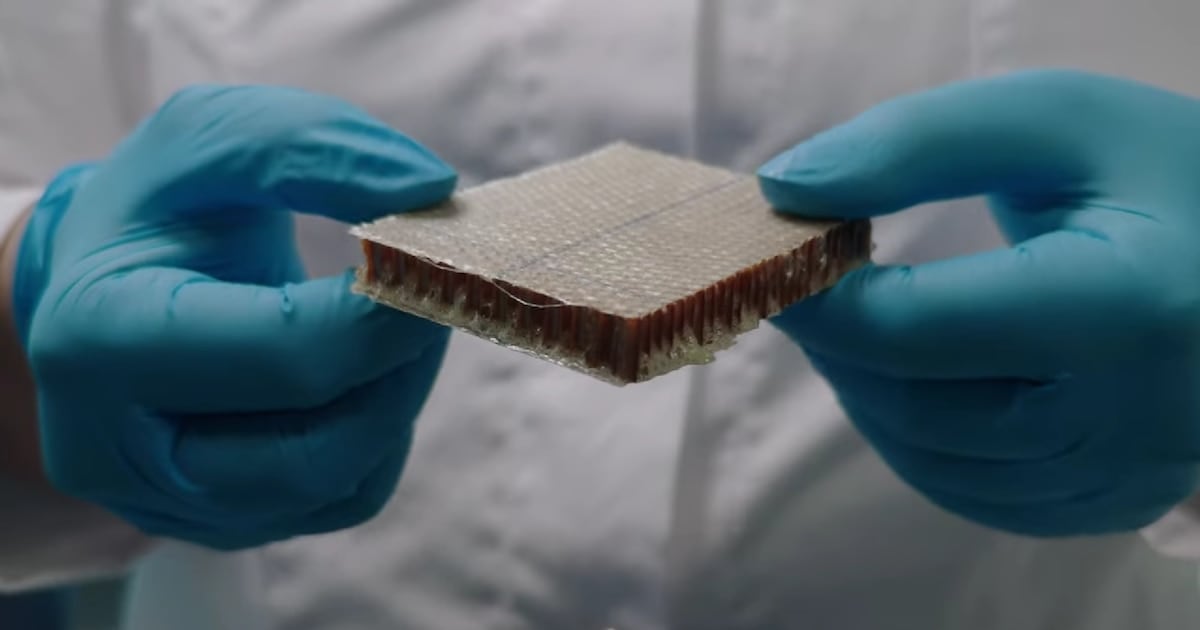
A trip that begins with a delayed train may end with a lesson about the materials used to build it. Most floor panels and cabin interiors in airplanes and trains combine fiberglass or carbon-fiber fabric with a honeycomb core and epoxy resin. The result is light and strong, but when its useful life ends, separating those layers is not as easy as taking apart a piece of furniture.
Researchers at Empa, the Swiss federal laboratories, developed an epoxy resin with a phosphorus-based additive. According to the project information, the additive makes the material flame-retardant and allows cured epoxy to soften under controlled temperature. The research was carried out with Elantas and financing from the Swiss innovation agency Innosuisse.
El fuego complicó la ecuación
“When you make a material flame-retardant, you always end up changing its other properties as well.”Sabyasachi Gaan, investigador
The advance is not limited to reshaping the resin. By applying a suitable solvent together with heat, the multilayer structure can be separated into its aramid honeycomb, woven fiber layers and, potentially, the resin itself. The laboratory says that recovering the epoxy from the solution is still the subject of future research, so the complete recycling of the compound is not yet confirmed.
- La resina modificada conserva prácticamente las mismas propiedades mecánicas que el epoxi convencional.
- Cumple los requisitos de seguridad contra incendios exigidos por los sectores aeronáutico y ferroviario.
- El panal de aramida y la fibra de carbono pueden recuperarse por separado.
- La recuperación de la resina epoxi sigue en estudio y podría permitir reciclar casi todo el compuesto.
The project demonstrated the technical viability of the approach, although its scale and industrial application remain to be consolidated. In other words, the material promises more than a graceful farewell: it could travel from the aircraft or train directly into a recycling process. I, who have already struggled to separate the layers of a damaged cable without breaking a nail, prefer to reserve the celebration for the pilot plant.
My practical advice is not to treat the announcement as the end of the matter. Ask for life-cycle data, industrial-scale tests and evidence that the recovered materials retain their value before celebrating the definitive arrival of fully recyclable panels.
Comentarios
0Todavía no hay comentarios. Sé el primero.
Seguí leyendo

Inteligencia Artificial escribe cerca del 30% del código de Microsoft, ¿El futuro de la ingeniería?

Impacto de la Computación Cuántica: Cómo Está Transformando Nuestras Vidas
Revolución en la cocina espacial: el horno que permitiría cocinar en gravedad cero